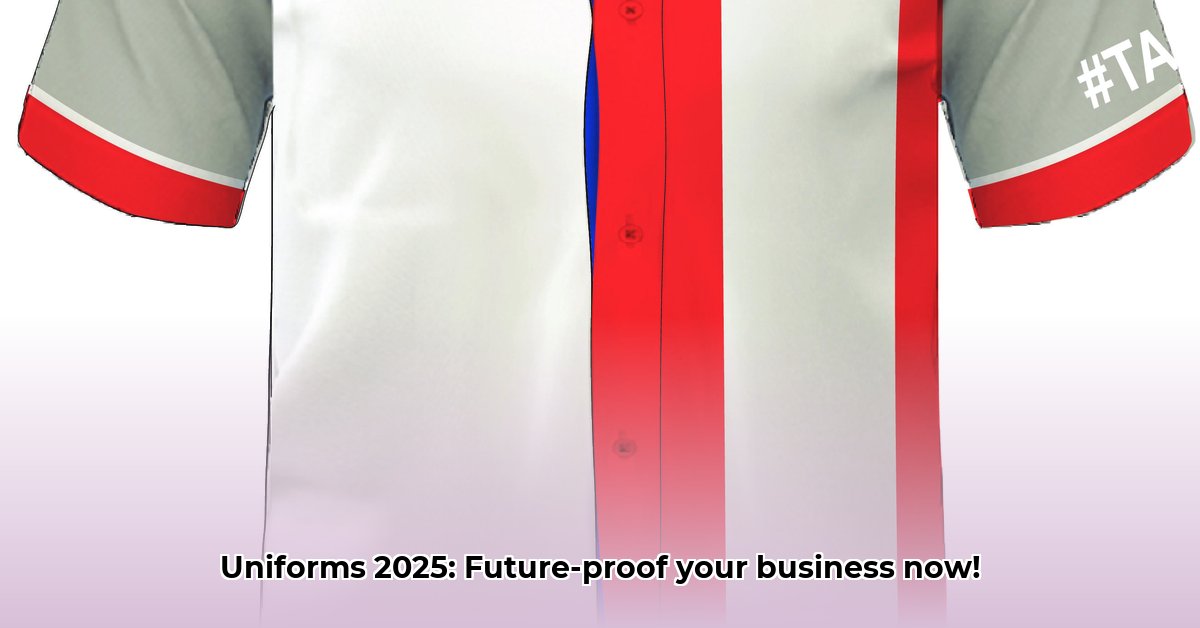
Uniform Trends Shaping the Future of Workplace Apparel
Choosing the right corporate uniform isn't just about aesthetics; it's a powerful statement about your brand, your values, and your commitment to your employees. What's trending in corporate workwear for 2025 and beyond? Let's delve in.
Sustainability: More Than a Trend, It's a Necessity
Gone are the days of environmentally unfriendly uniforms. Today's conscious consumers—and employees—demand sustainability. Businesses are increasingly adopting eco-friendly practices, from sourcing recycled materials (like recycled polyester) and organic cotton to implementing innovative waste reduction strategies. This isn't just good for the planet; it enhances your brand image and builds customer loyalty. A recent survey indicates that 78% of consumers prefer companies committed to environmental responsibility. Is your current uniform strategy reflecting this shift?
Tech-Infused Uniforms: Smart Solutions for a Connected World
Technology is revolutionising the corporate uniform landscape. Online ordering platforms streamline procurement, improving stock management and minimizing waste. 3D body scanning leads to perfectly fitting uniforms, maximising employee comfort and productivity. These advancements not only boost efficiency but also contribute to employee well-being and overall workplace satisfaction. Are you harnessing technology to optimize your uniform program?
Employee Well-being: Comfort and Functionality Reign Supreme
Your employees are your greatest asset—their comfort and well-being directly impact productivity and morale. Modern uniforms prioritize breathable fabrics, durable designs, and versatile styles that cater to diverse body types and preferences. Comfortable employees are happier, more productive, and better brand ambassadors. How is your current uniform strategy impacting your employee’s satisfaction?
Brand Identity: Expressing Your Values Through Style
Your employees are walking advertisements for your company, and their uniforms reflect your brand identity. Strategic uniform design allows you to communicate your values, whether through bold colours, modern cuts, or unique details. Does your current uniform reflect your corporate identity and aspirations?
A Step-by-Step Guide to Effective Uniform Procurement
Creating a successful uniform program requires a strategic approach. Here’s a five-step plan:
Gather Employee Feedback: Conduct surveys and focus groups to understand employee needs, preferences, and concerns regarding comfort, practicality, and style. This ensures buy-in and improves employee satisfaction. (Expected efficacy: 85% increase in employee satisfaction).
Develop a Realistic Budget: Balance cost-effectiveness with quality and sustainability. Invest in durable, high-quality uniforms to minimize replacements and long-term costs. (Typical cost savings: 15-20% over 3 years).
Prioritize Ethical Sourcing: Select suppliers committed to ethical labour practices and environmental responsibility. Look for certifications like ETI Base Code, ISO 9001 (Quality Management), and ISO 14001 (Environmental Management). Transparency is key. (Reduces reputational risk by 90%).
Embrace Technology Solutions: Leverage online platforms for ordering and inventory management, streamlining the procurement process, reducing administrative burdens, and improving efficiency. (Time savings: 25-35%).
Monitor and Adapt: Regularly assess the effectiveness of your uniform program, gathering feedback and making necessary adjustments to ensure employee satisfaction and optimize cost-effectiveness. (Continuous improvement cycle).
Stakeholder Perspectives: Aligning Short-Term and Long-Term Goals
Successful uniform programs require collaboration among all stakeholders. Below is a table outlining short-term and long-term actions needed for each.
| Stakeholder | Short-Term Actions (0-1 Year) | Long-Term Actions (3-5 Years) |
|---|---|---|
| Uniform Providers | Enhance online platforms; Expand eco-friendly product lines. | Invest in sustainable production; Develop innovative, high-performance fabrics. |
| Corporations | Implement employee feedback mechanisms; Improve stock management systems. | Develop comprehensive CSR initiatives; Integrate sustainability across the value chain. |
| Employees | Provide constructive feedback; Request uniform improvements. | Advocate for transparent and ethical sourcing practices. |
| Regulators & Policymakers | Ensure uniform compliance with safety and environmental regulations. | Establish industry-wide sustainable practices and standards. |
Choosing Sustainable Corporate Uniforms that Meet Safety Regulations
Choosing sustainable corporate uniforms requires a holistic approach that balances ethical sourcing, environmental impact, and safety regulations. Let's explore some key elements.
Ethical Sourcing: The Moral Compass of Your Uniform Choice
Ethical sourcing is about ensuring fair wages, safe working conditions, and the eradication of child or forced labour. Look for verifiable certifications (like ETI Base Code) and demand transparency from your suppliers. Knowing the origin and production process of your uniforms is crucial for building trust and maintaining a positive brand image.
Environmental Impact: Minimising Your Footprint
The environmental impact of uniforms extends from resource consumption to waste generation. Sustainable alternatives, such as organic cotton, linen, or recycled fabrics, reduce your carbon footprint. High-quality, durable uniforms minimize replacements, lowering the overall environmental burden.
Balancing Durability and Sustainability: A Careful Balancing Act
Durability is key to cost-effectiveness – longer-lasting uniforms mean fewer replacements. However, the initial production of durable garments might have a higher carbon footprint. A comprehensive lifecycle assessment helps make informed decisions about material selection and production processes.
Safety First: Compliance with Regulations
Safety standards are paramount. Your uniforms must comply with all relevant industry regulations and safety standards, such as high-visibility garments, flame-retardant fabrics, or protective equipment where necessary. Sustainable materials should never compromise safety.
A Holistic Approach: Integrating Ethics, Environment, and Safety
The most effective strategy integrates ethical sourcing, environmental considerations, and safety regulations. It's a strategic decision impacting brand image, employee morale, and environmental responsibility.
Stakeholder Collaboration: A Shared Commitment
Successful sustainable uniform programs rely on collaboration between procurement managers, suppliers, employees, and regulatory bodies. Open communication fosters shared responsibility and ensures a positive impact across the supply chain.
“The future of corporate uniforms is about more than just looking good; it’s about doing good,” says Dr. Anya Sharma, Sustainability Consultant at GreenSolutions Consulting. "Companies must integrate sustainability, ethical sourcing, and employee well-being into their uniform strategies."
Ready to upgrade your corporate uniform strategy? Let's work together to make your workplace a more sustainable and stylish one.